

Many people wonder how blood flow restriction can be so effective at loads as light as 20-40% 1 RM in producing similar gains in muscle mass and (to a lesser extent) strength as heavier load (60-70+% 1RM) protocols.
It all comes down to understanding three main concepts: the force-velocity (FV) curve, fatigue and the effect of fatigue on muscle activation patterns.
As we introduce our blog to the fitness and rehab community, the BFR Pros is excited to announce that our inaugural blog posts will be focused on breaking down the science behind blood flow restriction.
Concept 2: Fatigue
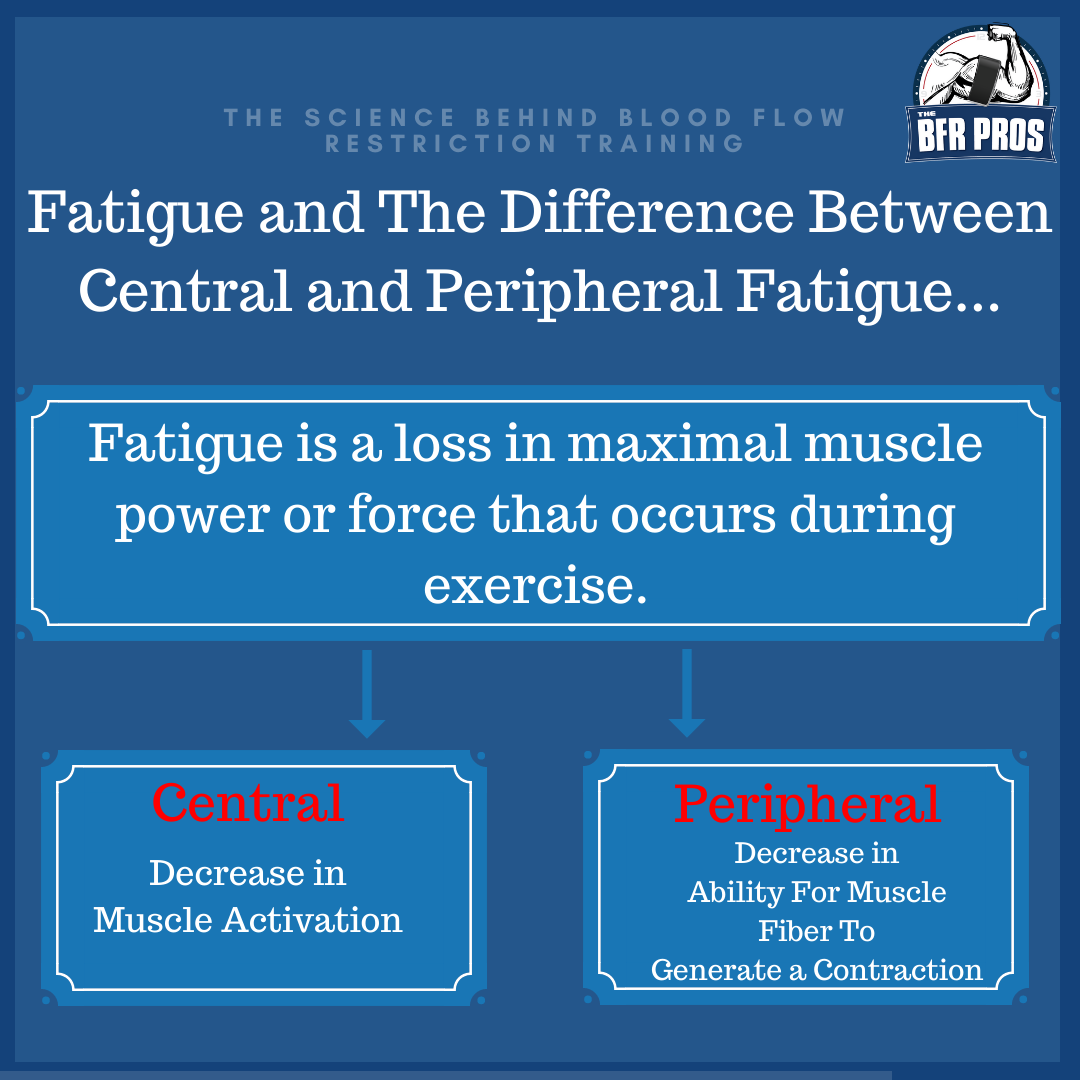
Fatigue can be described as central or peripheral in nature. For the purposes of this post, peripheral fatigue occurs when there is an inability of a muscle fiber to meet the force demands of the task causing more muscle fibers to be recruited. Only during light loads with high amounts of volume (repetitions per set) can enough peripheral fatigue accumulate to force these new muscle fibers to be recruited. Even then, there is the potential for low-load training to lead to sub-optimal hypertrophy even if failure is reached due to the accumulation of central fatigue.
Accumulation of central fatigue means that despite reaching failure at a given load, the high-threshold motor units may not be fully activated. This is thought to be a protective mechanism to prevent against excessive muscle damage caused from prolonged activities and in cases where there exists little to no muscle damage, is relatively transient and dissipates in 2 minutes or less upon cessation of the exercise. However, during the exercise itself, low-loads may be suboptimal past a certain point in driving hypertrophy due to a number of factors, the primary one being accumulation of central fatigue. Strategies to minimize central fatigue may lead to better outcomes in accumulating muscle size when lighter loads are used such as during rehabilitation.
Missed concept 1? Check out the posts you missed in our blog archive!